
The Evolution of Interior Design: How Changing Lifestyles Are Changing the Way We Design Homes
From comprehensive design projects to online design and expert consultations—finding the right level of design support for every home and every homeowner.

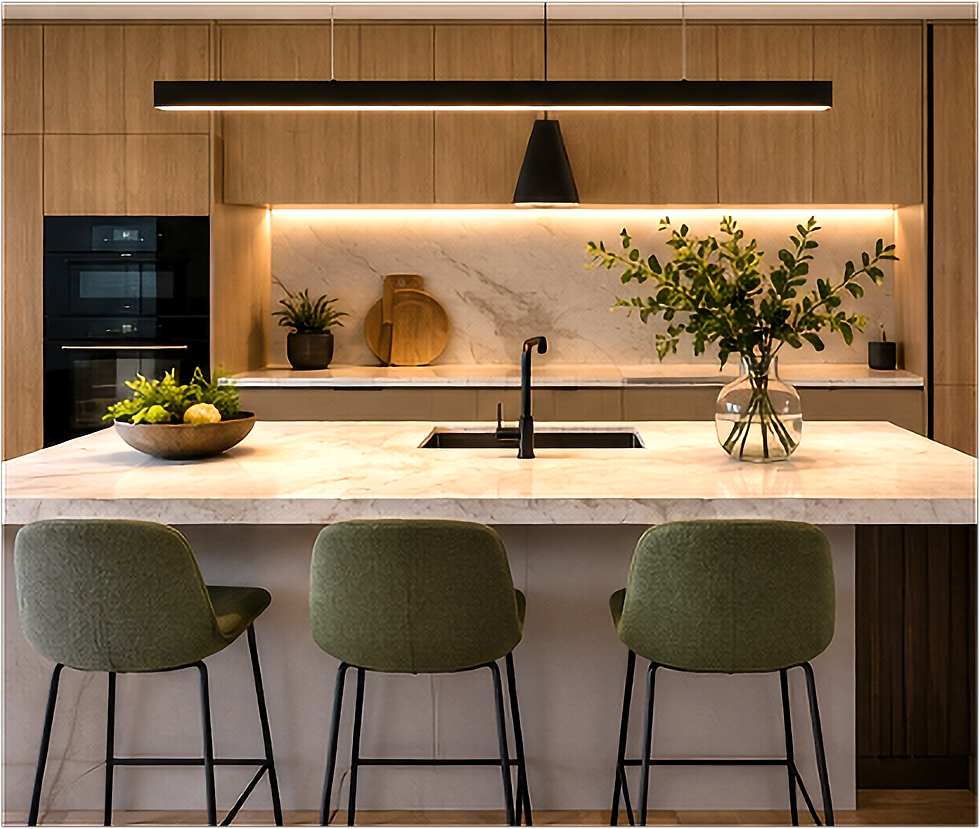
Changing lifestyles are changing the way we design our homes. This topic sits at the heart of our daily lives, yet often evolves so gradually that we don’t always notice it.
Interior design has always reflected the way people live. It is, in many ways, a visual record of society’s priorities, habits, aspirations, and challenges. When our lifestyles change, our homes inevitably follow.
Today, we are living through one of the most significant lifestyle shifts in modern history. The way we work, socialize, raise families, consume technology, and even care for our wellbeing has transformed dramatically over the last decade - and our homes are being redesigned to accommodate these changes.
The home is no longer simply a place where we eat, sleep, and relax.
It has become a workplace.
A classroom.
A wellness retreat.
An entertainment hub.
A creative studio.
And for many, all of these functions need to coexist within the same space.
This evolution presents exciting opportunities, but it also requires a more thoughtful and strategic approach to design.
The Rise of Multifunctional Living
One of the most obvious shifts has been the rise of multifunctional spaces.
Not long ago, rooms were assigned a single purpose. A dining room was used for dining. A study was used for work. A guest room sat largely untouched until visitors arrived. Today, every square metre needs to work harder.
We see dining tables doubling as workstations, guest bedrooms functioning as home offices, and living areas transforming into entertainment spaces by evening.
As designers, we are responding with solutions such as:
Flexible furniture systems
Built-in storage that maximizes functionality
Fold-away desks
Modular seating arrangements
Sliding partitions that create adaptable zones
The emphasis is no longer on designing rooms. It is on designing experiences and flexibility.
The question has shifted from “What is this room for?” to “How many ways can this room support the people who live here?”
The Home Office Revolution
Perhaps no lifestyle change has impacted design more profoundly than remote and hybrid work. The home office has moved from a luxury feature to an essential component of modern living.
However, creating a productive workspace is about far more than placing a desk in a spare corner. Many clients initially request a workspace and quickly realize they need an environment that supports concentration, creativity, and wellbeing.
We now carefully consider:
Ergonomics
Natural lighting
Acoustic comfort
Technology integration
Visual backgrounds for virtual meetings
Storage for work-related materials
The most successful home offices today are seamlessly integrated into the overall design of the home rather than feeling like an afterthought.
Designing for Wellness
Another major shift is the growing emphasis on wellness.
People are increasingly aware that their environment influences how they feel physically, mentally, and emotionally. As a result, wellness-centered design has become a defining trend rather than a niche concept.
We are seeing increased demand for:
Natural materials such as timber, stone, and linen
Improved indoor air quality
Larger windows and natural light
Circadian lighting systems
Indoor plants and biophilic design
Calming color palettes
Dedicated meditation or fitness spaces
Clients are no longer asking only, “How will this look?” They are asking, “How will this space make me feel?”
That is a profound shift in design thinking.
Technology and the Connected Home
Technology has become another invisible yet powerful design element and smart homes are changing the way we interact with our spaces.
Lighting, climate control, security systems, blinds, entertainment systems, and appliances can now be controlled through a single device.
Great design ensures that technology enhances a home without dominating it.
The challenge for designers is creating spaces that feel warm, comfortable, and human while integrating increasingly sophisticated technology.
The best smart homes don’t feel technological. They simply feel effortless.
Sustainability Is No Longer Optional
Perhaps one of the most important lifestyle changes influencing design is the growing commitment to sustainability. Homeowners today are more conscious of environmental impact than ever before.
This has led to increased interest in:
Energy-efficient lighting
Sustainable materials
Locally sourced products
Durable furniture designed to last
Water-saving fixtures
Passive heating and cooling strategies
People are moving away from disposable design and toward investment pieces that offer longevity and quality.
The conversation is no longer solely about aesthetics. It is about responsibility.
Personalisation Over Perfection
Another fascinating evolution is the move away from rigid design rules and showroom-perfect interiors.
Today’s homeowners want spaces that tell their story. They want homes that reflect their personality, values, experiences, and lifestyle.
This means blending styles rather than adhering to a single design category. It means displaying meaningful collections, family heirlooms, travel memories, and personal artwork.
The most beautiful homes today are often not the most expensive. They are the most authentic.
Design is becoming increasingly personal, and that is something worth celebrating.
The Evolution of Design Services
Just as lifestyles have evolved, so too have the ways people seek design support because not every homeowner requires the same level of assistance.
The reality is that modern homeowners value flexibility, convenience, and access to expertise in ways that were not possible before.
Some are building or renovating an entire home and need comprehensive project management from concept to completion.
Some may live in different cities or have busy schedules that make traditional in-person design services difficult.
Others are confident making decisions themselves but need expert guidance to avoid costly mistakes.
As designers, our role has evolved from simply creating beautiful spaces to providing support that meets people where they are.
For some clients, that means a fully managed design journey where every detail is carefully curated and coordinated.
For others, it means leveraging technology to access professional design services remotely, receiving tailored plans, specifications, and guidance online.
And sometimes, all that is needed is a focused consultation—an opportunity to gain clarity, confidence, and direction before moving forward independently.
The common thread across all of these approaches is the same:
People want expert guidance that aligns with their unique circumstances, goals, budget, and lifestyle.
Finding the Right Level of Support
At Cape Living Interiors, we have embraced this evolution because we understand that every project—and every homeowner—is different.
Some clients benefit most from our Full Design Service, where we guide the entire process from concept development through implementation, ensuring a cohesive and highly personalised result.
Others appreciate the flexibility and accessibility of our Online Design Service, which allows them to access professional design expertise regardless of location while maintaining greater involvement in the execution process.
And for those seeking clarity, inspiration, or professional insight before making decisions, our Consultation Service provides focused expert guidance that can often save significant time, money, and uncertainty.
These are not simply different services.
They are different pathways to achieving the same goal: Creating homes that support the way people live today.
Closing Thoughts
As we look to the future, one thing is clear:
Interior design will continue to evolve because people will continue to evolve.
Our homes will keep adapting to new technologies, new family structures, new working patterns, and new definitions of wellbeing.
The most successful designs will not be those that blindly follow trends. They will be the ones that respond thoughtfully to human needs.
Because ultimately, great interior design is not about decorating spaces. It is about improving lives. It is about creating homes that function beautifully, feel deeply personal, and support the people who live within them every day.
And whether that journey requires a comprehensive design solution, an online collaboration, or simply expert guidance at a critical moment, the goal remains the same: To create spaces that are not only beautiful, but meaningful!


Comments